How to Winterise Your Houseplants Before the First Frost
The first frost rarely announces itself. One morning the lawn is grey, the greenhouse glass is opaque, and the tender plants you left out for "one more week" have collapsed into blackened mush. Moving plants indoors is not just a question of shifting pots from patio to windowsill. The change from bright, breezy outdoor conditions to warm, dry, dim rooms is a shock, and the fortnight either side of that move often decides whether your pelargoniums, citrus and fuchsias make it to spring. Get it right and most plants settle in without complaint; get it wrong and you spend January picking yellow leaves off the carpet and wondering where the mealybugs came from.
Know Your Frost Dates and Your Plants' Limits
Frost arrives at different times depending on where you garden. Sheltered city centres and mild coastal spots may not see a proper frost until November, while inland valleys and northern parts of Scotland can be caught out in late September. Forecasts are more useful than the calendar, so start watching night-time temperatures from mid-September onwards.
Keep a note of the average first-frost date for your area, but treat it as a rough guide rather than a deadline. A single clear, still night can drop several degrees below the surrounding forecast, and plants tucked against a south-facing wall or under the overhang of a porch will hold on longer than those standing in the open. Pots are far more vulnerable than plants in the ground, because their roots have no mass of soil to insulate them; a rootball in a 30cm terracotta pot can freeze solid while the border beside it is untouched.
Frost is not the only threshold. Many tropical plants sulk at temperatures well above freezing, so bring them in while nights are still around 7–10°C rather than waiting for the first icy morning.
- Tender tropicals — banana, coleus, begonias, hibiscus: indoors before night temperatures drop below about 10°C.
- Half-hardy favourites — pelargoniums, fuchsias, citrus, olives, oleander: around 7–10°C is their limit.
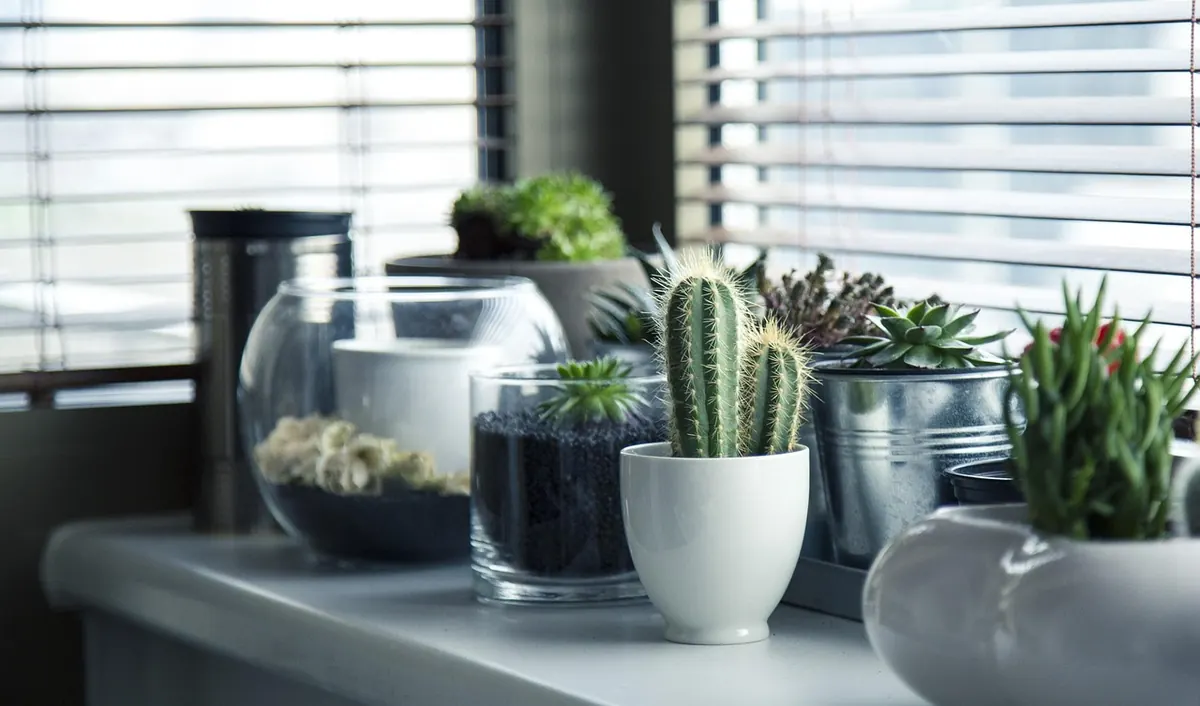
- Succulents and cacti — aeoniums, echeverias, jade plants: happy to wait until 5–7°C, and they prefer a cool, dry winter.
- Hardy perennials in pots — leave them outside, but protect the pot itself.
If you are unsure, err on the side of bringing plants in early. A fortnight on a bright windowsill does far less harm than a single night at 2°C, and it buys you time to find pests before they have a chance to spread through the rest of your collection.
The Threshold Checklist
Whatever comes in should be clean. Autumn is peak season for pests, and a single overwintering female mealybug can quietly colonise a whole windowsill by February. Work through this before a plant crosses the doorstep.
- Strip dead, yellowing and diseased leaves, and clear fallen debris from the compost surface.
- Turn every leaf over, and check stems, pot rims and the saucer. Mealybugs look like small white woodlice or cotton wool; scale insects are brown bumps that flick off with a fingernail; red spider mite leaves fine webbing and a stippled, dusty look.
- Wipe the pot and saucer with soapy water. If a plant is badly infested, treat it and leave it outside for another week rather than importing the problem.
- Check drainage holes for slugs and ants, which love the damp shelter of a pot base.
- Quarantine new arrivals in a spare room, porch or cool garage for two to three weeks before adding them to your indoor collection.
Resist the urge to repot everything as it comes in. Late autumn is the wrong moment for root disturbance, and a slightly pot-bound plant copes far better than one settling into fresh compost in low light. Make an exception only if the compost is waterlogged or infested with vine weevil grubs.
Pruning is best left alone too. Cutting back leggy growth now encourages a flush of soft shoots that have no light to support them, and those pale stems are magnets for aphids. Tidy obvious dead wood if you must, but save the real shaping for late February or March, when the light returns and the plant can respond.
Ease Off the Watering
This is where most winter casualties happen. Growth slows almost to a standstill, light is weak, and compost that dried out in two days on a sunny patio can stay damp for a fortnight indoors. Soggy roots rot quietly, and by the time leaves yellow and drop, the damage is done.
Water when the top two or three centimetres of compost are dry, not on a fixed weekly schedule, and use water at room temperature — cold tap water chills roots. Empty saucers and decorative pots about twenty minutes after watering rather than letting plants stand in water. A cloud of tiny black flies rising from the compost is a reliable sign you are watering too often.
Cacti and most succulents want a genuine rest: a light watering once every four to six weeks is plenty for many, and some can go almost completely dry in a cool room. Winter growers such as Christmas cactus, cyclamen and aeoniums are the exceptions and need regular water through the darker months.
Stop feeding until spring
From roughly October to late February, most houseplants need no fertiliser at all. Feeding now pushes soft, pale growth that stretches towards the window and attracts pests. Winter-flowering plants are the exception and can have a weak dose at half strength. Start feeding again when fresh growth appears in spring.
Choose the Right Windowsill
Light is the single biggest difference between a plant that thrives indoors and one that merely survives. Summer sun outdoors is many times stronger than winter light filtered through glass, and as the sun drops lower in the sky, a windowsill that was shaded all summer may suddenly receive hours of direct light.
- South-facing windows give the most light and suit citrus, hibiscus, cacti and other sun-lovers — but leaves pressed against the glass can be chilled on a freezing night, and strong midday sun in a heated room may scorch foliage grown outdoors in softer conditions.
- East and west windows offer gentler light and suit pelargoniums, fuchsias, begonias and most foliage plants.
- North-facing rooms stay dim all winter. Use them for plants that are genuinely resting, or add a simple grow light on a timer.
Rotate pots a quarter turn each week so plants do not lean permanently towards the pane, and pull them back from the glass during the coldest spells. Watch for draughts from ill-fitting frames and, just as importantly, for the blast of hot, dry air from a radiator directly beneath the sill — that combination of heat and low humidity is hard on almost everything.
Group Plants for Humidity, Not Crowding
Indoor air in winter is dry, especially in heated rooms, and that dryness stresses plants already coping with weak light. Grouping pots together creates a small pocket of higher humidity around the leaves, and standing them on a tray of pebbles with water kept below the pot bases adds more without waterlogging roots. A short mist in the morning helps delicate ferns and calatheas, though the effect fades within an hour.
Crowding, however, has a price. Leaves pressed against leaves trap damp and block air movement, which is exactly what grey mould and other rots need to take hold. Leave a hand's width between pots, and open a window for ten minutes on mild, still days to flush out stale air.
Reading the Warning Signs
Winter problems usually develop slowly, which means they are easy to catch early if you know what you are looking at. A quick weekly inspection, turning a few leaves and lifting a pot or two, will tell you most of what you need to know.
- Yellowing lower leaves — almost always overwatering rather than hunger. Let the compost dry out further before the next drink.
- Crisp brown leaf edges — dry air, a draught, or a plant sitting too close to a heat source.
- Long, pale, spindly stems — not enough light. Move the plant closer to the window, or accept that growth will resume properly in spring.
- Sticky residue on leaves or sills — honeydew from scale insects or aphids hiding on stems and leaf undersides.
- Fuzzy grey mould on buds or compost — botrytis, encouraged by cold, damp, still air. Remove affected material and improve ventilation.
- Sudden leaf drop after the move — usually simple shock. Most plants recover within a few weeks, though ficus and citrus may sulk for longer.
A plant that limps through winter is not a failure — it is resting. The aim is not growth, but survival with enough reserves to surge back into life when the light returns.
Winterising is really about slowing down in step with your plants. Fewer drinks, no feeding, less handling and a cool, bright position will carry most of them through to March. By the time the first warm week arrives, the plants you brought in will be ready to harden off and head back outside — and the ones you left in the cold will have taught you exactly where your garden's limits lie.
Photo: milivigerova / Pixabay

You Might Also Like
A practical checklist for organising a neighbourhood cutting and seed swap, covering format, venue, plant health rules, labelling, how to run the day, and the follow-up that keeps people coming back.
A practical beginner's guide to growing food on balconies and small spaces, covering compact crops, suitable containers and compost, plus watering and feeding tips.